










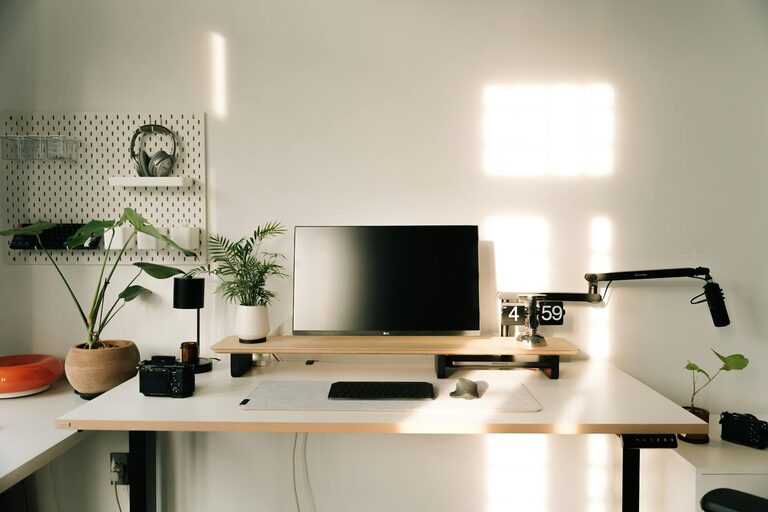
Creating a home office that is both sustainable and organised can enhance your productivity while reducing your environmental footprint. As more people work from home, designing a space that supports your work goals and reflects eco-friendly principles is becoming increasingly important. This guide offers practical advice to help you set up a home office that is tidy, efficient, and gentle on the planet.
Why Choose a Sustainable and Organised Home Office?
A sustainable home office minimises waste, conserves resources, and promotes healthier living by limiting exposure to harmful materials. Simultaneously, an organised workspace improves focus, reduces stress, and saves time searching for items. Combining both concepts can greatly improve your work experience.
Planning Your Space Thoughtfully
Assess Your Needs
Before buying anything, consider the type of work you do and what you need to be comfortable and productive:
– Desk space and surface area
– Seating comfort and ergonomics
– Lighting requirements
– Storage for documents and supplies
– Technology and cable management
Use Natural Light Where Possible
Position your desk near a window to maximise natural light, which reduces electricity use and improves mood. Avoid glare on screens by adjusting blinds or choosing smart layouts.
Choose a Suitable Location
Pick a quiet, dedicated spot free from distractions. Separate from other home areas if possible to help maintain work-life balance.
Sustainable Furniture and Materials
Opt for Eco-Friendly Furniture
Look for desks and chairs made from sustainable or recycled materials, such as:
– FSC-certified wood
– Bamboo products
– Reclaimed or upcycled furniture
Prioritise Quality and Durability
Invest in pieces that will last for years instead of cheap items that may need replacing frequently, generating unnecessary waste.
Avoid Harmful Chemicals
Choose furniture certified as low in volatile organic compounds (VOCs) to improve indoor air quality.
Organising Your Workspace
Declutter Regularly
An organised space starts with getting rid of unnecessary items. Use the “one in, one out” rule to keep clutter minimal.
Smart Storage Solutions
Incorporate storage that suits your needs:
– Filing cabinets or boxes for paperwork
– Shelves for books and equipment
– Drawer organisers for stationery
Label containers clearly for quick access.
Cable Management
Use clips, ties, or cable sleeves to keep cords tidy and prevent tangling. This also reduces dust accumulation and tripping hazards.
Technology with Sustainability in Mind
Energy-Efficient Devices
Choose computers, printers, and other electronics with good energy ratings. Switch them off when not in use, including overnight.
Recycle Old Electronics
Dispose of outdated gadgets responsibly through local recycling schemes or manufacturer take-back programmes.
Use Digital Tools for Paper Reduction
Rely on digital calendars, note-taking apps, and cloud storage to minimise printing and paper usage.
Encouraging Eco-Friendly Habits
Reduce Single-Use Items
Use refillable pens, reusable notebooks, and washable coffee cups to cut down on waste.
Green Your Space
Add low-maintenance houseplants to improve air quality and create a calming atmosphere.
Conserve Energy
Switch off lights when natural light suffices and consider LED bulbs for lower electricity consumption.
Personalising Without Compromising Sustainability
You can decorate and personalise your home office without sacrificing eco values:
– Choose artwork from local artists or printable downloads
– Use recycled or natural fibre textiles for cushions and rugs
– Opt for second-hand or vintage items to add character
Maintenance and Upkeep
Keep your home office clean and well-maintained by:
– Setting weekly tidying routines
– Cleaning air vents and dusting regularly
– Checking the condition of furniture and electronics
Proper care extends the life of your belongings and keeps the space welcoming.
Final Thoughts
A sustainable and organised home office benefits both you and the planet. By thoughtfully planning your workspace, selecting eco-friendly furniture, maintaining good organisation, and adopting green habits, you can create an environment where productivity thrives and sustainability is a priority. Start small and make gradual improvements for long-lasting positive change.